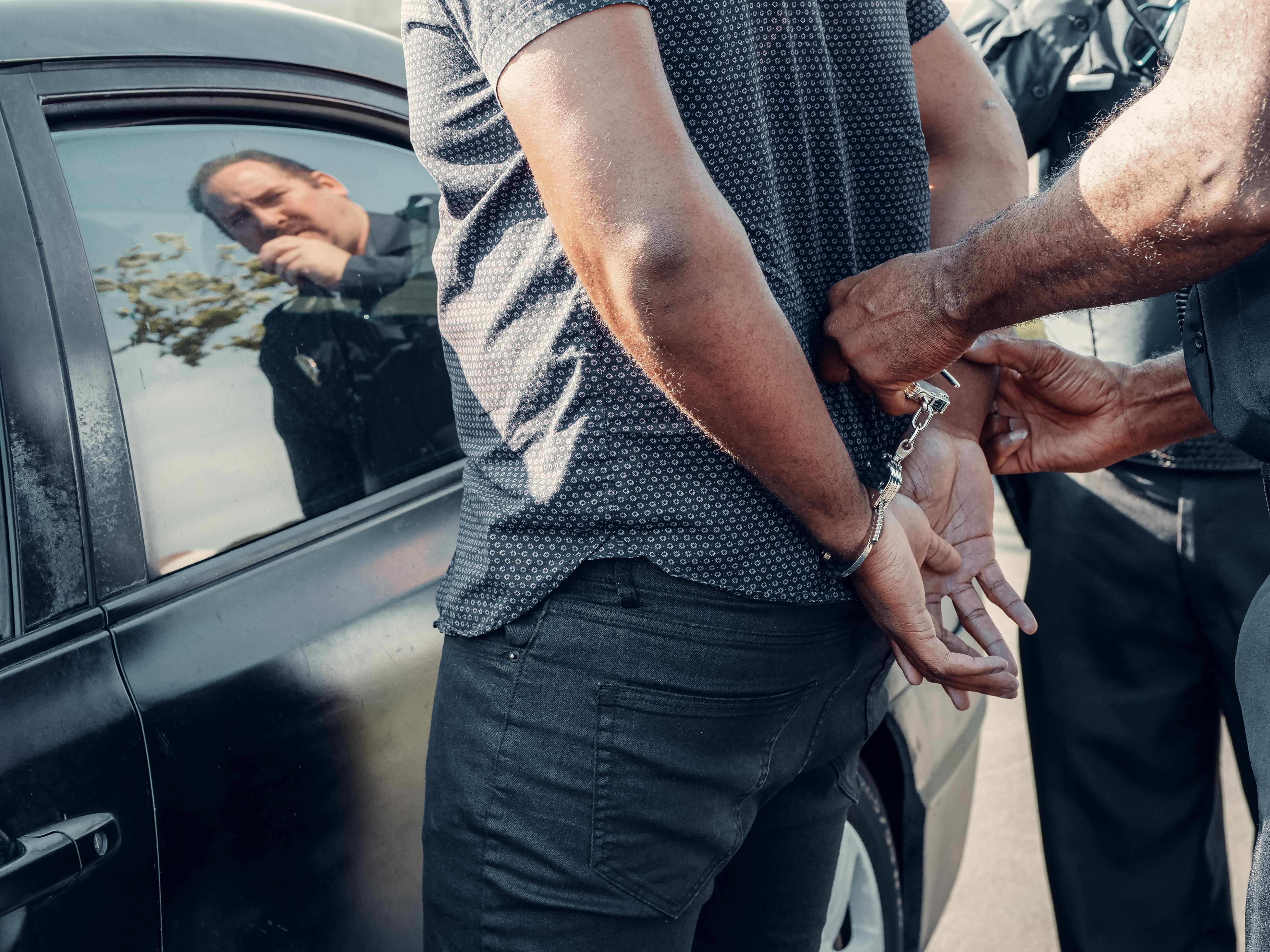
When a law enforcement officer suspects a driver of impairment, they don't make that determination all at once. The National Highway Traffic Safety Administration (NHTSA) developed a standardized three-phase process that trained officers are expected to follow when investigating a potential DWI. Understanding these phases matters — because errors or deviations at any phase can form the basis of a legal challenge, is vitally important.
Phase One: Vehicle in Motion
The investigation begins before the officer ever speaks to you. From the moment they observe your vehicle, they are evaluating your driving behavior for signs of impairment.
NHTSA identifies specific driving cues associated with impairment, including:
- Weaving within a lane or across lane lines
- Turning with a wide radius
- Stopping abruptly or too far from a line
- Driving significantly below the speed limit
- Delayed response to traffic signals
- Following too closely
The officer's observations during Phase One must be sufficient to establish a legal basis for the stop. If the stated driving behavior doesn't meet that standard — or if dashcam footage contradicts the officer's account — the stop may be legally invalid. Evidence obtained after an unlawful stop is generally inadmissible.
Phase Two: Personal Contact
Once the vehicle is stopped, the officer shifts to direct observation. During this phase, they are evaluating you through conversation and close-range observation, looking for additional signs of impairment.
Common cues officers are trained to note include:
- Odor of alcohol on the breath
- Slurred or slow speech
- Bloodshot, watery, or glassy eyes
- Fumbling with license or registration
- Difficulty understanding or responding to questions
- Admission of drinking
Officers are also trained to observe how you respond to divided attention tasks — such as locating documents while answering questions simultaneously — since impairment is said to affect the ability to multitask.
But here’s the thing: all of these personal observations are subjective. They must rely on the officer's interpretation, and they can be influenced by lighting, medical conditions, fatigue, nervousness, or language barriers. When the officer's conclusions are not supported by objective evidence, these observations must be challenged.
Phase Three: Pre-Arrest Screening
If the officer's observations during Phases One and Two support a reasonable suspicion of impairment, they will move to Phase Three — standardized field sobriety testing and, in many cases, a preliminary breath test.
NHTSA recognizes three standardized field sobriety tests (SFSTs):
- Horizontal Gaze Nystagmus (HGN) — The officer tracks involuntary jerking of the eye as it follows a moving object. Nystagmus becomes more pronounced at the margins of vision when a person is impaired by alcohol.
- Walk-and-Turn (WAT) — A divided attention test requiring the subject to walk heel-to-toe along a line, turn, and return. Officers look for specific cues including stepping off the line, using arms for balance, or taking the wrong number of steps.
- One-Leg Stand (OLS) — The subject stands on one foot for 30 seconds while counting. Officers note swaying, hopping, putting the foot down, or using arms for balance.
Each SFST must be administered in strict accordance with NHTSA guidelines. An officer who skips instructions, conducts the test on an uneven surface, fails to account for physical limitations, or misinterprets cues is not producing reliable evidence. Improper administration can render the results challengeable — and in many cases, inadmissible.
It’s also worth noting that you can legally refuse any field sobriety test as well as a preliminary breath test. These tests are almost always administered in a haphazard fashion and, accordingly, aren’t reliable. But because even the shoddy evidence gained in these tests can be used against you later on (regardless of your actual blood alcohol content), we don’t recommend taking them at all. However, you must take a breath, blood, or urine test after your arrest, you will face legal consequences.
What can an attorney do?
A DWI defense attorney reviews each phase of the investigation systematically:
- Did the officer have a legally sufficient reason to initiate the stop?
- Were personal observations documented accurately and consistently with available video footage?
- Were field sobriety tests administered according to NHTSA protocol by a properly certified officer?
- Was a preliminary breath test device properly maintained and used correctly?
A single significant error in any phase can lead to suppression of key evidence and fundamentally change the trajectory of a case.
If you've been charged, contact us for a free consultation.

